The Cuban Air Force Today. General viewRuben Urribarres |
 Summary
  DAAFAR chief: Brigade General Tomas Valdes Hernandez
Strengh: Today 6,000 (in the eighties 20,000)
Time of service: 3 year.
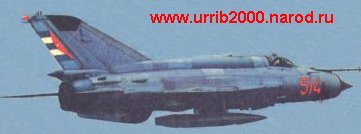
Equipment: Today has in service only half a dozen aircraft MiG-21. At 1990 had near 180 combat aircrafts, 60 transports, 70 trainers and 70 helicopters. In total, with miscelaneus and reserves, are near 420 aircrafts, the 90% are soviet built.
The Revolutionary Air Force (FAR) is part of the DAAFAR (Revolutionary Air Force and Air Defense Forces), one of the three components of the Revolutionary Armed Forces (FAR). In this corp are included too surface to air missiles and anti/aircrafts artillery.
The commander of the Revolutionary Air Force and Air Defense Forces rank as a vice minister and reports directly to the chief of the General Staf. The Air Force commander controls the General Staff of the Revolutionary Air Force and Air Defense Forces, and exercises authority over a subordinate command structure which is similar to that of the Army. The role of the Revolutionary Air Force and Air Defense Forces is to preserve the integrity of Cuban airspace, to give tactical and logistical support to the Revolutionary Army and Navy and to provide such aviation services for civilian agencies as may be required. By the quantity of combat aircraft, their quality and the combat experience of their men, the Revolutionary Air Force is the stronger Air Force of Latin America. Their pilots give a useful operational experience in military campaigns overseas, and in operations in national territory. Many pilots have hundreds combat sorties and thousands of flight hours.
 The
Revolutionary Air Force was divided into three territorial commands, known as air
zones, each containing an air brigade made up of a variable number of air regiments
and independent squadrons. Each air regiment has has a minimum front line strenght
of 30 aircraft, and the independent squadrons are of variable composition. From the total of 200 aircrafts by 1990, today because of wear and lack of parts flies only half a dozen of
MiG-21. All the MiG-23 and MiG-29 were writed off.
The troops of the Air Defense Forces have 4 brigades of
surface to air missiles with and 28 battalions.
The
Revolutionary Air Force was divided into three territorial commands, known as air
zones, each containing an air brigade made up of a variable number of air regiments
and independent squadrons. Each air regiment has has a minimum front line strenght
of 30 aircraft, and the independent squadrons are of variable composition. From the total of 200 aircrafts by 1990, today because of wear and lack of parts flies only half a dozen of
MiG-21. All the MiG-23 and MiG-29 were writed off.
The troops of the Air Defense Forces have 4 brigades of
surface to air missiles with and 28 battalions.
 Most
training was carried out at the Aviation Cadet School (Escuela Militar de Pilotos
de Aviación -EMPA), at San Julián, which offers courses in sophisticated
aircraft and missile operations, with specialist technical and flight training
schools. The period of instruction for officers varies between four and five years
according to specialisation. The Instituto Técnico Militar (ITM), at Havana,
offers comprehensive specialist training in communications, avionics and aeronautical
engineering, and training for anti -aircraft troops. All flying personnel formerly
received part of their instruction in the Soviet Union, where combat aircrews
also received additional advanced training. In the former USRR in more of 30 years
were training a total of 3.380 Cuban military aviators (pilots and specialist).
To compare the importance of the Cuban aviation program, here were too trained
only 3,061 aviator from Iraq; 2,543 from Vietnam; 1,698 from East Germany; 1,632
from Ethiopie; 1,310 from Angola; 1,286 from Egypt; and 985 from North Corea (among
others countries). They have intensified considerably the training in simulators.
Most
training was carried out at the Aviation Cadet School (Escuela Militar de Pilotos
de Aviación -EMPA), at San Julián, which offers courses in sophisticated
aircraft and missile operations, with specialist technical and flight training
schools. The period of instruction for officers varies between four and five years
according to specialisation. The Instituto Técnico Militar (ITM), at Havana,
offers comprehensive specialist training in communications, avionics and aeronautical
engineering, and training for anti -aircraft troops. All flying personnel formerly
received part of their instruction in the Soviet Union, where combat aircrews
also received additional advanced training. In the former USRR in more of 30 years
were training a total of 3.380 Cuban military aviators (pilots and specialist).
To compare the importance of the Cuban aviation program, here were too trained
only 3,061 aviator from Iraq; 2,543 from Vietnam; 1,698 from East Germany; 1,632
from Ethiopie; 1,310 from Angola; 1,286 from Egypt; and 985 from North Corea (among
others countries). They have intensified considerably the training in simulators.
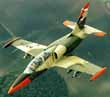
Officers also receive post -graduate training at specific points in their careers at the General M ?ximo Gomez Academy. Following the collapse of the Soviet Union all foreign training assistance was withdrawn. The previous dependence of the Revolutionary Air Force on foreign assistance is reflected in its small inventory of training aircraft relative to its overall size. Lack of fuel has all but put an end to flight training. Even without this handicap the available number of training aircraft would be inadequate to produce a sufficient output of qualified aircrews for the future.
II Part:
| Aviation
of others corps |
Civil
Aviation |
Air
Bases |
Missiles |
| Air
Defence |
Perspectives |
Equipment |
See also:
Cuban MiG-15
Cuban MiG-17
Cuban MiG-19
Cuban MiG-21
Cuban MiG-21 in action
Operación Pico: Cuban MiG-21 over Dominican Republic
Cuban MiG-17 and MiG-21 in the Ogaden War (Ethiopia)
Cuban MiG-23
Cuban MiG-23 in action (air-to-ground missions in Angola)
Cuban MiG-23 in action (air-to-air missions in Angola)
Cuban MiG-29
External Links:
Cuban Air Force MiG-29 Fulcrum
Cuban MiGs
Cuban Military Forum
The MiG-29 Fighter
Cuban MiG-23 over Venezuela
Cuba in Africa, The Angola War
|
|
|
|
|||